
At The Hook Studio, we define Return on Event Investment (REI) as the measure of success across all the key stakeholders that make an event possible:
Organisers
Delegates
Sponsors/partners (when applicable)
Even if sponsors/partners aren’t involved, organisers and delegates always are.
One thing you have to keep in mind is that, even if your event looks great on paper from your perspective (you hit lead targets or revenue goals), but sponsors didn’t see value, they won’t come back next year.
And if delegates didn’t think it was worth their time, they won’t either.
So yes, the event may have achieved a positive financial ROI this time, but in this scenario, it won’t have a sustainable REI for the future.
👉 Real event success isn’t about whether it worked once. It’s about whether it created enough value for every key stakeholder to want to do it again.
Here’s how you can define the Return on Event Investment for your events:
Step 1: Define Success for Each Stakeholder
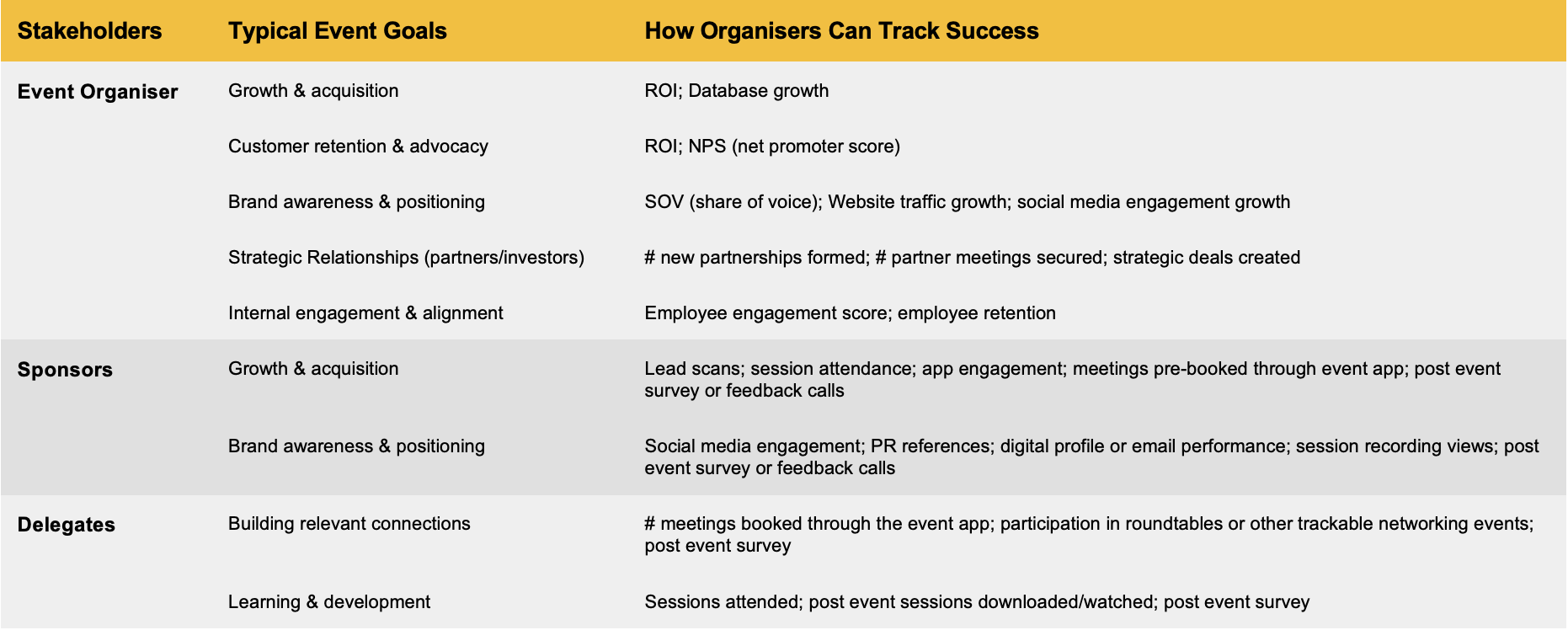
Start by identifying the goals for each group — your own, your delegates’, and your sponsors’.
Then plan how you’ll measure progress towards each one before the event takes place.
Here are just some examples of typical event goals by stakeholder and metrics you could choose to help you track towards your goal’s success 👇
Step 2: Connect Goals to Measurable Data
The key here is alignment with your leadership team. Make sure you are all in agreement on the event goals that will determine its success, and work together to define the metrics you’ll track to measure that success. This will look different for every company, and there’s no single right or wrong answer but once you’ve aligned on the goals and metrics, you can put clear measurements in place to ensure that, by the end of the event, you’ve collected the data you need to evaluate your performance.
Step 3: Plan Your Measurement in Advance
Once you’ve defined the goals and metrics for each stakeholder, you can identify:
What data you need to collect,
What tools or surveys you’ll use, and
When you’ll gather that information (before, during, and after the event).
💡 Tip: If you’ve hosted this event before, use last year’s data as a benchmark. It gives you a realistic baseline for goal-setting this time around.
Step 4: Calculate Your Return on Event Investment Score
As results come in, compare your targets with actual outcomes.
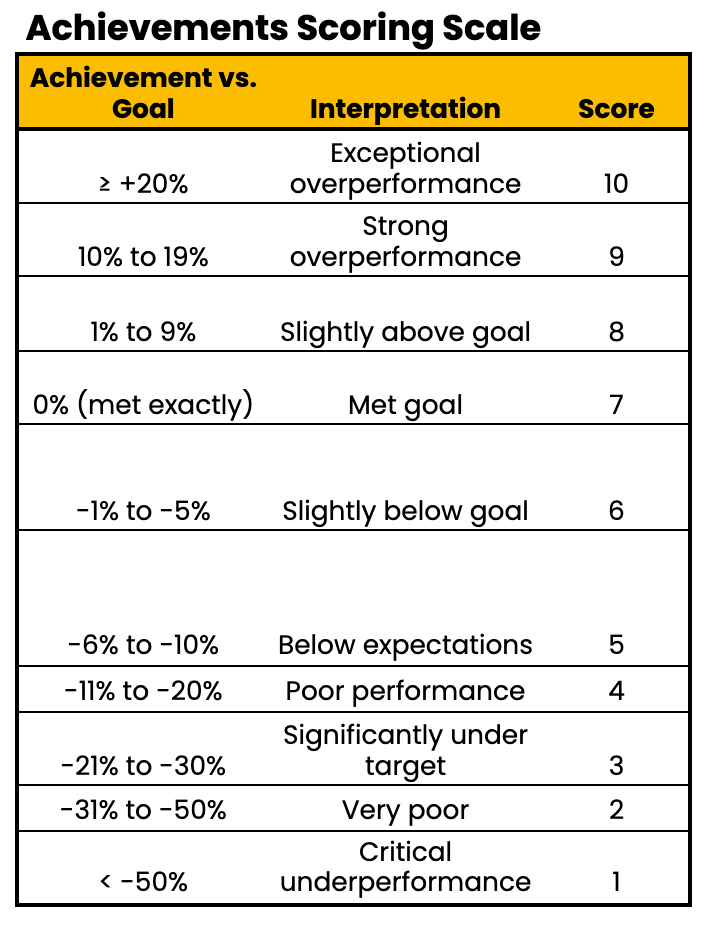
The difference between your goal and your result gives you a percentage of achievement.
You can then assign each goal a score (1–10) based on a specific scoring scale logic like the one below to help you visualise performance at a glance:
Here’s an example of what that might look like overall for a sample event 👇
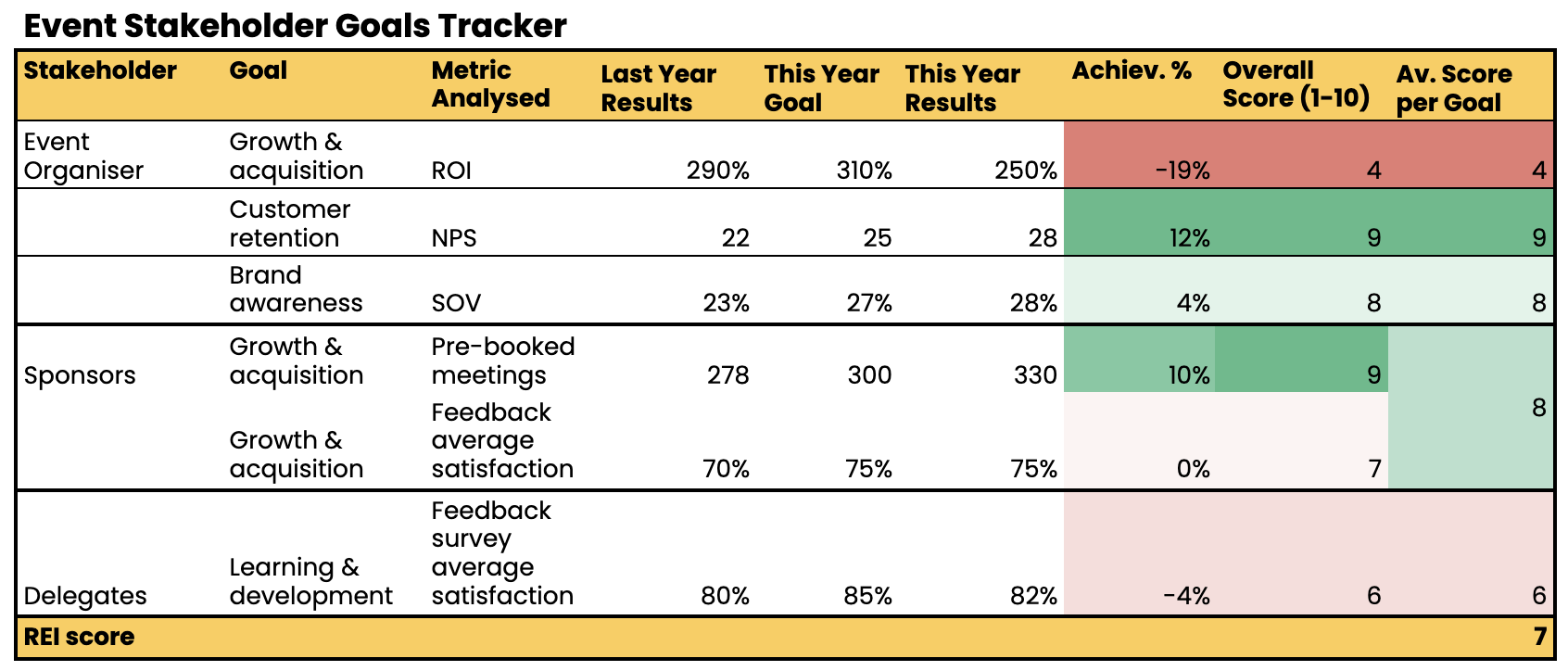
Overall Event Score: 7 → Met Goal
Step 5: Use Your REI to Tell a Stronger Story
This framework gives you the language and data to have clear, confident conversations with your executive team.
It helps you:
Justify your event strategy and budget
Highlight wins beyond just leads or revenue
Show how the event delivered value for everyone — not just the business
When you can measure what truly matters, you’re not just proving your event worked but you’re proving it’s worth doing again.
📊 Download The Hook Studio’s Return on Event Investment template Google sheet to track your own REI score - here
Need help setting up a tracking and analysis system tailored to your events? Book an exploratory call with The Hook Studio today.
